





Improving Software for Society
News | Blog Post : THE EVOLUTION OF ROBOTS – PART 2
THE EVOLUTION OF ROBOTS – PART 2
11.08.2026
The Evolution of Robots – Part Two: How They Help Us Every Day
Robots At Work
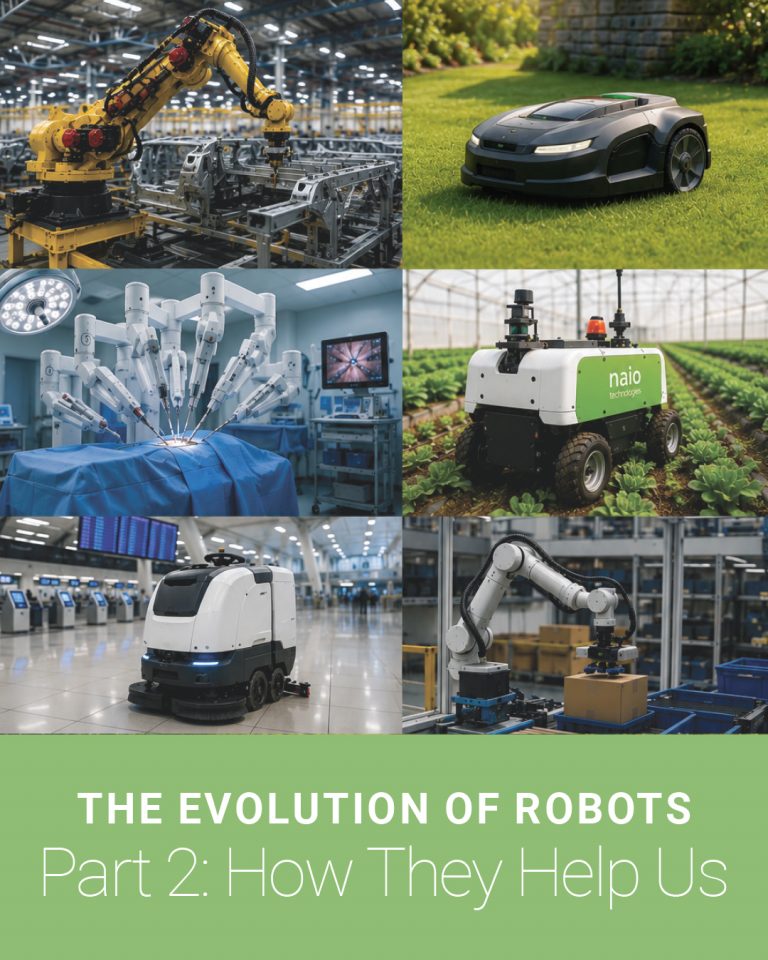
Robots are no longer confined to science fiction. They are now helping people in factories, warehouses, hospitals, farms and even homes. Robots can perform repetitive, physically demanding or dangerous jobs, allowing people to concentrate on tasks that require creativity, judgement and communication.
In manufacturing, robotic arms are widely used to weld, paint, assemble and inspect products. In warehouses, autonomous mobile robots move shelves, packages and materials around large facilities. The UK Government identifies manufacturing, logistics, agriculture, healthcare, energy and hospitality among the sectors already using robotics.
Real Robots in Action
There are many examples of robots already performing useful jobs:
Da Vinci Surgical System – robotic surgical technology that allows surgeons to carry out complex operations with highly precise movements.
Spot – Boston Dynamics’ four-legged robot, used for inspection, surveying and working in environments that may be difficult or dangerous for people.
Roomba – autonomous household vacuum cleaners that map rooms and clean floors with little human input. Tom – an agricultural robot developed by Small Robot Company that travels through fields and scans crops to identify individual plants and weeds.
Warehouse Robots – autonomous machines transport goods and materials, reducing the amount of walking and heavy lifting required from workers.
Where Are Robots Used?
The main industries and places include:
Manufacturing – factories and production lines
Warehousing & Logistics – distribution centres and fulfilment warehouses
Healthcare – hospitals, operating theatres and laboratories
Agriculture – farms, greenhouses and fields
Energy – offshore wind farms, oil and gas facilities
Construction – building sites and surveying
Hospitality – hotels, restaurants and commercial kitchens
Retail – shops, stockrooms and warehouses
Defence & Security – surveillance and hazardous environments
Homes – cleaning, lawn care and other household tasks
The future of robotics is increasingly about collaboration. Advances in artificial intelligence, sensors and autonomous navigation are making robots more capable and adaptable. The UK is investing £52 million in Robotics Adoption Hubs to help organisations introduce robotics into their workplaces. In part three of our robotics series we’ll be looking into the potential of how robots could develop in the future.
Further Information
To read a research and analysis article about robotics on the gov.uk website go to: www.gov.uk/rta-robotics and about robotics and automation opportunities in the UK: www.business.gov.uk/campaign/grow-your-business-in-the-uk/robotics-automation/.
